- Published on
The Luminous Wolf Moon of 2026: A Supermoon Spectacle and Celestial Connections
- Authors

- Name
- Juno Ryelie
The Luminous Wolf Moon of 2026: A Supermoon Spectacle and Celestial Connections
The year 2026 began with a captivating celestial spectacle: the first supermoon of the year, traditionally known as the Wolf Moon. This dazzling event offered skywatchers worldwide a unique opportunity to witness our lunar neighbor's enhanced grandeur. More than just a visual treat, the Wolf Moon also coincided with other cosmic phenomena, inviting us to contemplate the wonders of the night sky and inspiring broader curiosity about the cosmos.
Quick Context
A supermoon is an astronomical phenomenon where a full moon occurs when the Moon is at or very near perigee—its closest point to Earth in its elliptical orbit. This unique alignment makes the Moon appear notably larger and brighter than an average full moon, creating a truly impressive lunar display. The year 2026 commenced with such a spectacle on January 3rd, captivating audiences across the globe, from India to London. Occurring three to four times a year, these events serve as powerful reminders of the dynamic celestial dance between Earth and its satellite.
Surprising Fact:
The Wolf Supermoon of 2026 appeared approximately 30 percent brighter and roughly 14 percent larger than the most distant full moon of the year, making it a truly remarkable spectacle for observers around the world.
Key Statistic:
At its closest approach to Earth during perigee, the Moon was a mere 362,641 kilometers away, a proximity that significantly contributed to its striking and enhanced appearance in the night sky.
What You Need to Know
The first supermoon of 2026, famously known as the Wolf Moon, illuminated the night sky on January 3rd. While the Moon reached its astronomical peak illumination globally at 5:30 am EST (4 pm IST), prime viewing experiences often occurred shortly after local sunset when the Moon was low on the horizon. For instance, in India, skywatchers enjoyed the most appealing views between 5:45 pm and 6:00 pm IST as the glowing orb ascended in the eastern sky. Similarly, peak viewing times varied worldwide: London saw it at 10:03 am GMT, Tokyo around 7:30 pm local time, and Sydney at 9:03 pm.
As the Moon hovered near the horizon, it often appeared unusually massive due to a fascinating phenomenon known as the "Moon illusion." This is a trick of the human eye that makes low-hanging celestial bodies look giant when compared to terrestrial objects like buildings or trees, despite the Moon’s actual size remaining consistent at that elevation. Furthermore, many observers noted a distinct orange-yellow tint during moonrise. This warm coloration occurs because moonlight has to travel through a thicker layer of Earth’s atmosphere when the Moon is low, which scatters away blue light and allows warmer tones to reach our eyes, enhancing the visual drama of the moment.
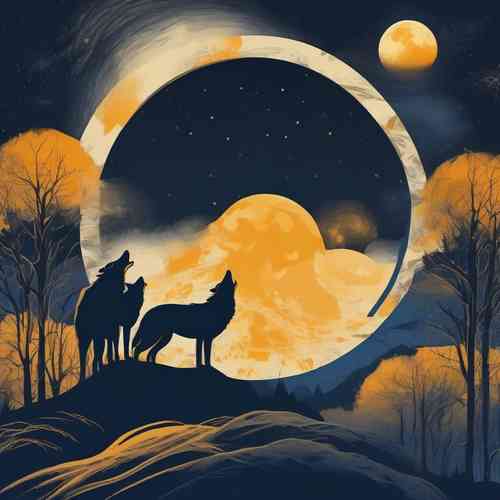
January’s full moon is traditionally known as the Wolf Moon, a name deeply rooted in Northern Hemisphere folklore. This designation evokes images of wolves howling during long, cold winter nights, forming a poignant connection to the wild. It is also sometimes referred to as the Moon after Yule, reflecting its timing in the post-holiday season and its deep cultural ties. This particular event held additional significance as it marked the conclusion of a four-month supermoon sequence that began in September, bringing a spectacular close to this series of lunar alignments.
Core Development:
The new year's celestial delights weren't limited to the Wolf Supermoon alone; it also coincided with the Quadrantid meteor showers, offering a spectacular dual treat for those gazing towards the heavens.
Core Development:
Enjoying the supermoon required no specialized equipment; its enhanced brightness and size made it easily visible and enjoyable with the naked eye. However, for those seeking a more detailed experience, using binoculars or a small telescope could reveal finer features of the lunar surface, deepening appreciation for its increased proximity.
Why This Matters (Implications)
The annual arrival of the Wolf Moon, often coupled with other celestial events like meteor showers, holds significant cultural and societal implications, connecting us to natural cycles and ancient traditions. These phenomena serve as potent reminders of our place within the vast cosmos, inspiring awe and fostering a collective sense of wonder. The traditional naming of full moons, such as the Wolf Moon, intrinsically links contemporary astronomical observations with historical folklore, thereby enriching our understanding of human interaction with the natural world over millennia and deepening our connection to the sky above.
Moreover, the occurrence of a supermoon, where the Moon is significantly closer to Earth, has tangible, albeit subtle, effects. Its stronger gravitational pull at perigee leads to slightly higher tides, demonstrating a direct physical connection between our planet and its celestial companion. This gravitational interaction is a constant, though amplified during supermoon events, highlighting the Moon's fundamental role in Earth's oceanic rhythms.
For individuals, such captivating events often spark renewed interest in astronomy and skywatching, fostering a sense of wonder and encouraging a deeper connection with nature. The traditional name "Wolf Moon," for example, resonates deeply with observations of real wolves in their natural habitats. This connection is vividly exemplified by the dedication of nature observers who track wolves, underscoring the tangible link between the celestial names we use and the living creatures they reference. This blend of astronomical wonder and terrestrial observation highlights the enduring human fascination with both the vastness of space and the intricate details of the wild.
Potential Impact & Future Outlook
The widespread visibility and significant media attention surrounding the Wolf Supermoon of 2026 underscore a continuing and growing public fascination with celestial events. This heightened interest is likely to foster further engagement with astronomy and general skywatching, encouraging more people to step outdoors and appreciate the profound beauty of the night sky, and perhaps ponder the wider mysteries of the cosmos. While the January 2026 Wolf Moon concluded a specific supermoon sequence, anticipation for future supermoons—with the next one expected towards the end of 2026—will ensure that the lunar calendar remains an exciting topic, sustaining this renewed cosmic curiosity.
Beyond the immediate visual spectacle, these events reinforce our understanding of the Moon’s elliptical orbit and its dynamic relationship with Earth and the Sun. The scientific explanations behind phenomena like the "Moon illusion" and the atmospheric scattering of light during moonrise offer invaluable educational opportunities, effectively demystifying complex cosmic occurrences for a general audience. This blend of accessibility and scientific rigor helps bridge the gap between casual observation and deeper astronomical understanding, enriching public knowledge about our universe.
Looking ahead, the interplay of scientific observation and rich cultural significance ensures that events like the Wolf Moon will continue to captivate. The ongoing efforts of nature observers, such as those diligently tracking wolves and documenting their elusive behavior, provide a grounded, tangible context to these ancient celestial names. This bridging of ancient folklore and contemporary environmental awareness points to a future where both scientific literacy and an appreciation for nature's profound mysteries continue to expand, beckoning us to explore both the far reaches of space and the untamed corners of our own planet.
Conclusion
The Wolf Supermoon of 2026 was a magnificent start to the year, offering a brighter, larger Moon and reminding us of the captivating beauty of our solar system. From its traditional roots in ancient folklore and indigenous cultures to its tangible effects on Earth's tides, this celestial event seamlessly wove together science, culture, and personal wonder. As we look forward to future supermoons and anticipate the next meteor shower, let this serve as an invitation to continue observing the night sky and the natural world around us. Share your own skywatching experiences and stay updated on the wonders of the cosmos!